
The Ministry
The Ministry of National Economy: its history, the Deputy Prime Minister and his office, its mandate, its three strategic pillars and the bodies under its supervision.
Services
The Ministry's services for economic operators and citizens: businesses and economic operators, prices and markets, investment and development.
Overview
Press
Publications of the Ministry of National Economy - news, press releases, events and price watch bulletins - and its media: videos and photo galleries.
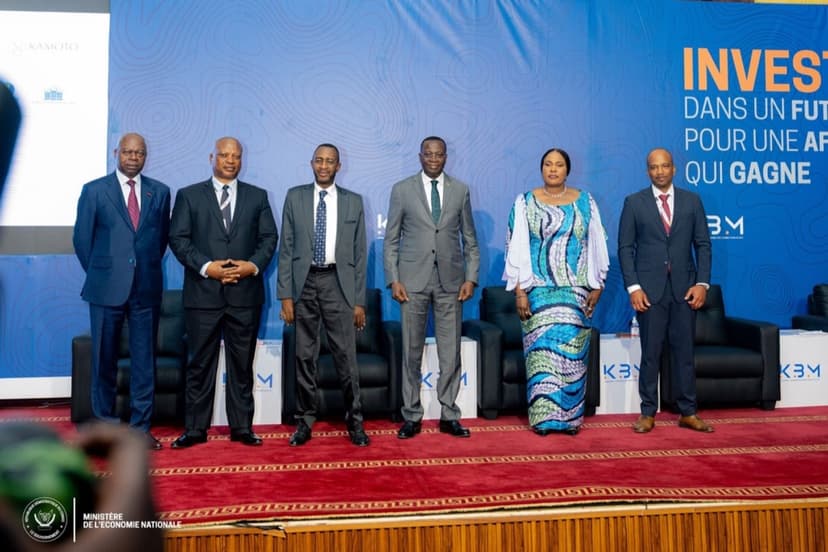
Les 3 axes stratégiques
Les trois axes stratégiques confiés au Ministère par le Programme d'actions du Gouvernement 2024-2028 : lutte contre la vie chère et protection des consommateurs, formalisation de l'économie informelle, redressement productif et mise en valeur des espaces productifs nationaux.
Overview
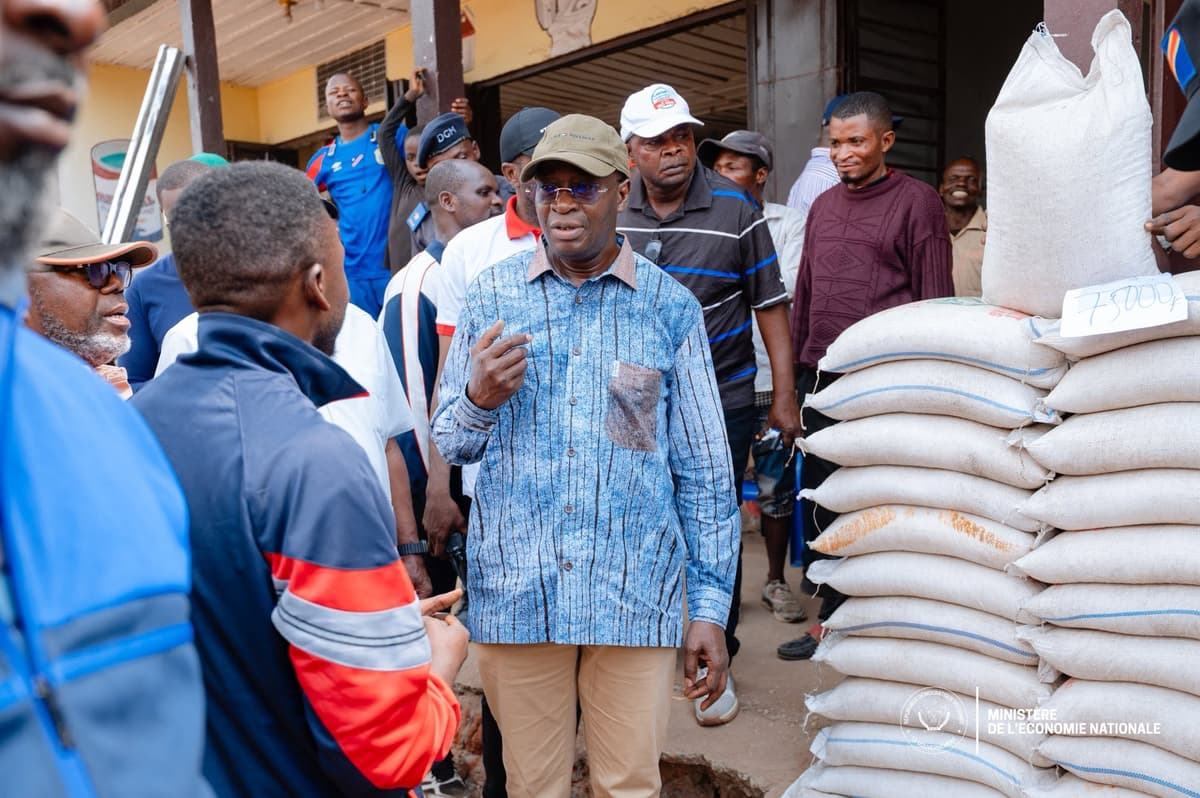
In the classical sense, the State conducts the economic policy of the Nation: it oversees production, regulates the domestic market, protects consumers and informs public decision-making through statistics. In the Democratic Republic of the Congo, this mission is carried out by the Ministry of National Economy, heir to an economic administration whose history mirrors that of the country.
Established at independence as the Ministry of Economic Affairs, and renamed the Department of National Economy under the Second Republic, the ministry has come through successive institutional reforms while retaining a core set of responsibilities: general production policy, regulation of the domestic market, price control of essential goods and competition policy.
Today it relies on bodies under its supervision — the Economic Regulation Fund (FOREC) and the Competition Commission (COMCO) — and on an administration present in all twenty-six provinces.
The ministry is developing into a modern, well-structured economic administration with a nationwide presence. Its mission is to lower the cost of living, formalise the economy and support the country’s productive recovery.
This history is presented in three periods:
Under colonial rule, the Congo’s economy was administered from the Governorate-General: the economic affairs services oversaw production, trade and prices for the benefit of the colonial economy. Congolese people were largely excluded from decision-making positions.
With independence on 30 June 1960, the first Government of the Republic established a Ministry of Economic Affairs, responsible for conducting the economic policy of the young State. It was in this context that the Decree-Law of 20 March 1961 on prices was adopted, the founding text of price regulation in the Democratic Republic of the Congo, amended several times but still in force.
During the early years of independence, marked by political instability and secessions, the economic administration was reorganised to secure the country’s supplies and control domestic trade.
Under the Second Republic, ministries were renamed “departments” and the economic administration became the Department of National Economy, headed by a State Commissioner. The legal framework for trade was overhauled by Law No. 73-009 of 5 January 1973 on trade (special law), which notably governs foreigners' access to commercial activities and distinguishes between wholesale and retail trade — a text still applied today.
The so-called “Zairianisation” measures of 30 November 1973 upended the country’s commercial and industrial fabric; their consequences would weigh on the national economy for a long time. The pricing regime was amended again, notably by Ordinance-Law No. 83-026 of 12 September 1983.
The end of the period was marked by a deep economic crisis — hyperinflation, the collapse of the productive base, and the looting of 1991 and 1993 — during which the department focused primarily on containing price increases for essential goods.
The Constitution of 18 February 2006 ushered in the Third Republic. The responsibilities of the Ministry of National Economy were specified by successive ordinances setting out the responsibilities of ministries, most recently Ordinance No. 20/017 of 27 March 2020: general production policy, regulation of the domestic market, assessment of the needs of the national economy, census of economic operators, competition policy and compilation of current economic statistics.
Law No. 18/020 of 9 July 2018 on freedom of prices and competition modernised the regulatory framework: it enshrines the principle of freedom of prices, regulates anti-competitive practices and establishes the Competition Commission (COMCO), placed under the supervision of the ministry alongside the Economic Regulation Fund (FOREC).
Since June 2024, under the leadership of the Deputy Prime Minister, Minister of National Economy Daniel Mukoko Samba, the ministry’s action has been organised around three strategic pillars — a lower cost of living, the formalisation of the informal economy and productive recovery — implemented through concrete programmes: Price Watch, certification of price parameters for petroleum products, No-Objection Notices for retail trade, and pre-registration of informal economy operators.
Learn about the responsibilities currently entrusted to the Ministry of National Economy.