
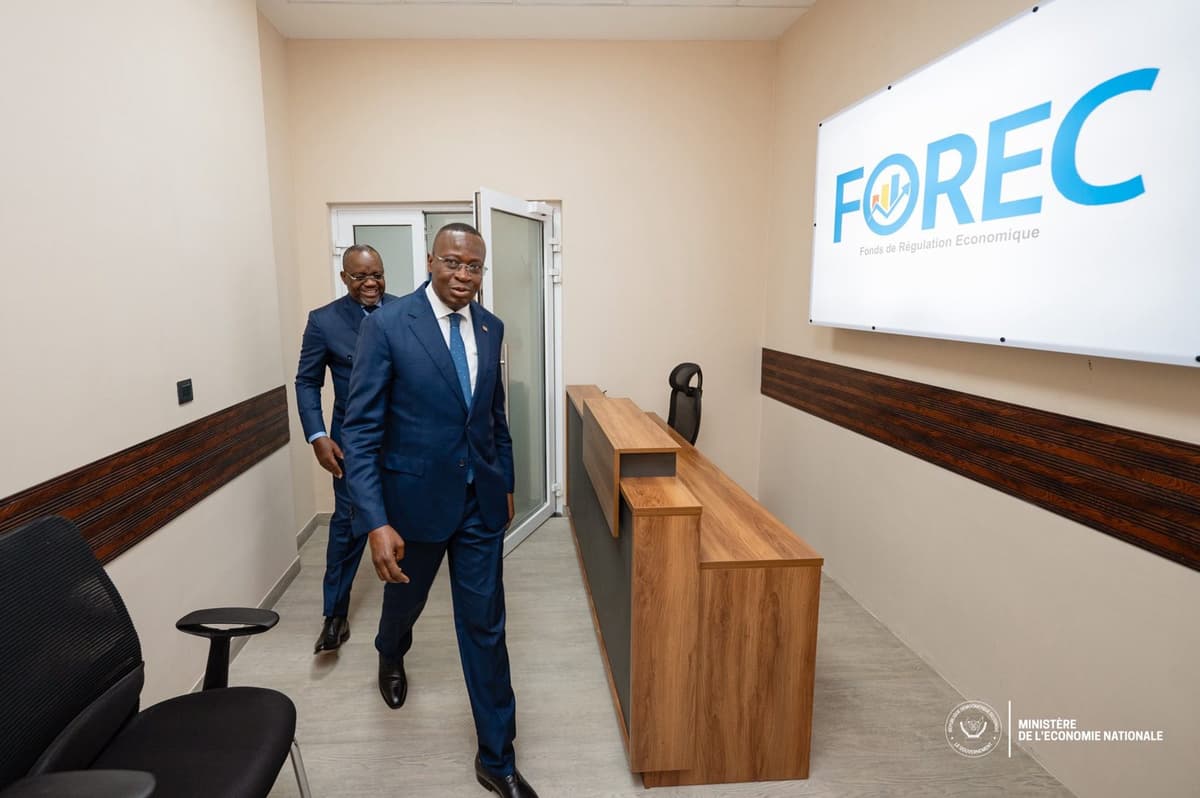
The Economic Regulation Fund (FOREC) is a public institution of the Democratic Republic of the Congo (DRC) with administrative and financial autonomy. Placed under the supervision of the Ministry of National Economy, its mission is to act as a shield against inflation, shortages and speculation on everyday consumer goods.
After remaining inactive for nearly two decades, FOREC began actual operations on 9 January 2026, at the initiative of the Deputy Prime Minister for National Economy, Daniel Mukoko Samba.
History of a long-awaited implementation (2008 – 2026)
Although established by official decree in May 2008, FOREC long remained an empty shell owing to a lack of political will and resources. A rigorous relaunch process was initiated in July 2023 by the Congolese government in order to structure its management committee and its technical unit. The establishment of its teams at its headquarters (GB district, commune of Ngaliema in Kinshasa) at the beginning of 2026 finally marked the start of its field activities.
Main responsibilities and mode of intervention
FOREC does not aim to replace the conventional mechanisms of supply and demand, but rather to act as a state regulator in times of crisis. Its objectives fall into two major areas:
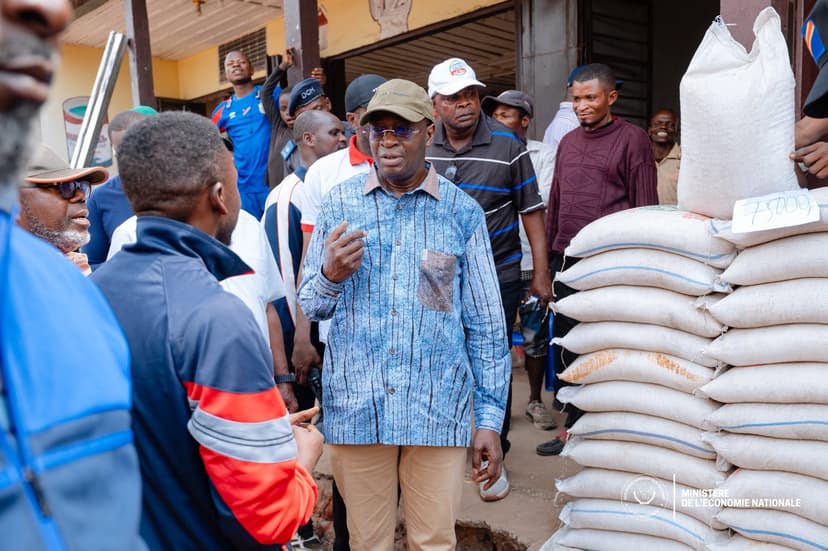
- Short-term component (Monitoring and Stabilisation): The institution conducts weekly monitoring of national markets to detect risks of shortages or abnormal price increases. In the event of market disruption, it intervenes through targeted mechanisms to stabilise the market (such as its interventions in response to the surge in maize prices in the Katanga area or rice prices in Tshopo).
- Structural component (Production support): The fund directly finances local agricultural and industrial value chains in order to reduce the DRC’s food dependency.
Actions and priorities for 2026
Since its deployment in early 2026, the fund has taken a series of strategic decisions:
- Targeting of 42 sensitive products: At the first meeting of its Advisory Committee in May 2026, FOREC approved a list of 42 everyday consumer goods that are priorities for household budgets (including maize, cassava and beans).
- Investments in transport infrastructure: In August 2026, FOREC signed an agreement worth USD 2.4 million with the Régie des voies fluviales (RVF) to rehabilitate and mark nearly 2,500 km of navigable waterways. The objective is to open up agricultural production centres and facilitate the supply of major urban centres such as Kinshasa.
- Production partnerships: Memoranda of understanding have been signed with key stakeholders, such as the Société Rizicole de Bumba (SRB) in Mongala province, to revive strategic local value chains on a large scale.
Related articles
Competition Commission (COMCO)
The Competition Commission of the Democratic Republic of the Congo (COMCO) is the national authority responsible for competition regulation and consumer protect…