
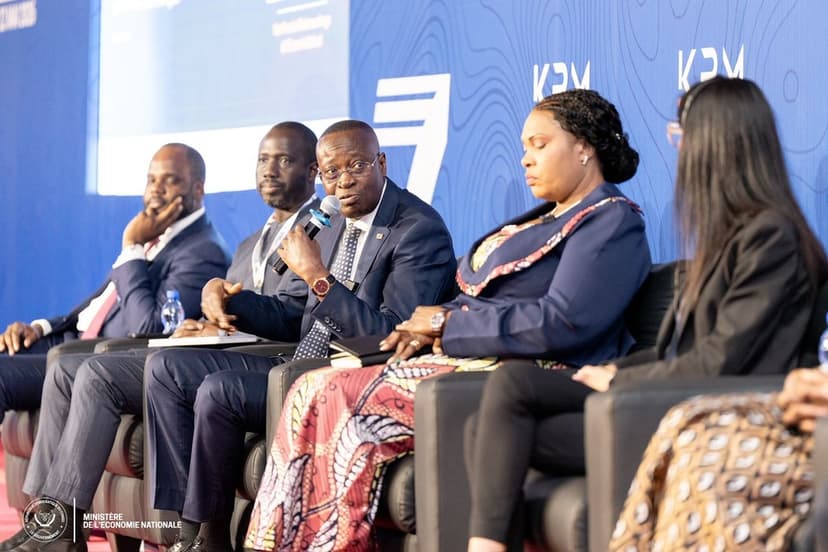

The Deputy Prime Minister, Minister of National Economy, Daniel Mukoko Samba, presented his first semi-annual report on the economy and the territories on Friday 20 November 2026, at the 103rd meeting of the Council of Ministers, held at the Cité de l’Union africaine in Kinshasa.
Entitled “Economic Situation, Domestic Markets, Economic Corridors and Productive Transformation”, the document aims to inform government decision-making by analysing the links between the national economic situation and economic activity in the territories.
“It offers an integrated and in-depth analysis that goes beyond macroeconomic indicators to connect national developments with domestic markets, territorial disparities and the development of local productive capacities,” state the minutes of the Council of Ministers.
A national average inflation rate can mask price differences between provinces. To shed light on these disparities, the report examines supply conditions and the way in which transport infrastructure connects production basins to markets.
Four areas of analysis and seven economic basins
The first part reviews the macroeconomic performance of the first half of 2026 in terms of growth, inflation, the exchange rate and public financing. The second focuses on domestic markets, examining price differences, supply and disparities in access to economic services.
The third part studies the role of transport infrastructure and economic corridors in the integration of the territories. The fourth analyses the prospects for economic diversification and the development of national value chains.
The report also includes a special feature on seven economic basins. Entitled “Connecting the Democratic Republic of the Congo: Production Basins, Domestic Markets and African Corridors”, this feature examines the links between production areas, outlets on the Congolese market and African corridors.
According to the minutes of the Council of Ministers, the report aims “to strengthen knowledge of the national economy, to shed light on the interdependencies between production, infrastructure, energy and markets, and to document economic developments”.
Intended to complement official economic documents, the report will be distributed in print and digital versions to members of the government, public administrations, academic partners and economic stakeholders. The Council of Ministers took note of its publication and of its purpose of becoming a periodic tool for analysing the Congolese economy.
Related articles
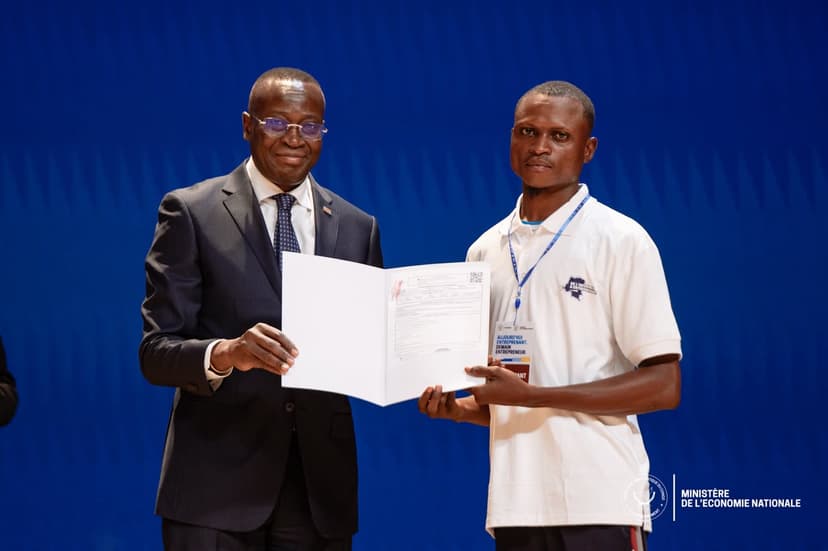
Formalisation of the informal economy: a new milestone reached in the DRC
On Thursday, 12 November 2026, the Ministry of National Economy held, at the Kinshasa Financial Centre and under the High Patronage of Prime Minister Judith Sum…
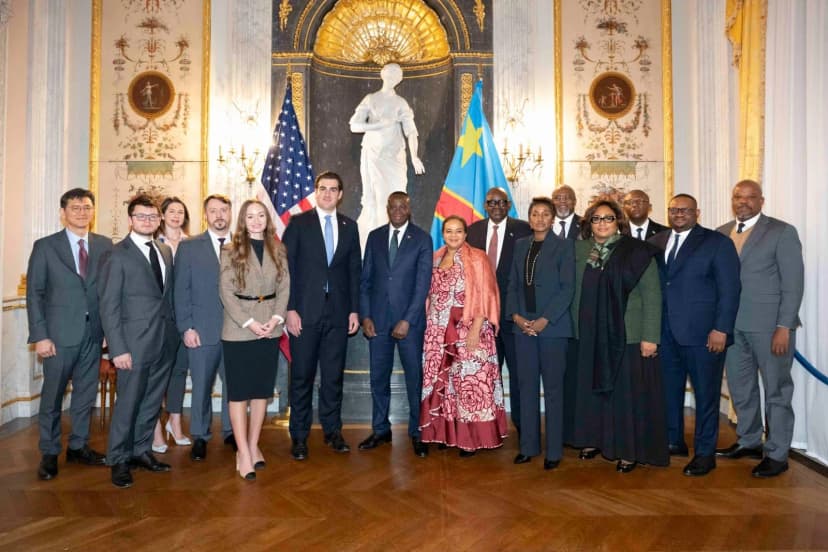
United States-DRC Partnership: Joint Statement of the Joint Steering Committee Meeting Held in Paris
JOINT STATEMENT ON THE OCCASION OF THE SECOND MEETING OF THE JOINT STEERING COMMITTEE BETWEEN THE UNITED STATES OF AMERICA AND THE DEMOCRATIC REPUBLIC OF THE CO…
Oil sector reform: the IMF welcomes the progress made by the Congolese Government
As part of the fourth annual review of the DRC’s economic and financial programme, the Deputy Prime Minister, Minister of National Economy, Daniel Mukoko Samba,…

Economic Sector Governance: Daniel Mukoko Samba's Ambitious Reforms Driving the DRC's Economic Catch-Up
For the taxi driver who dreads every rise in fuel prices, the mechanic in Kasa-Vubu who dreams of obtaining a loan to expand his workshop, or the trader who wis…
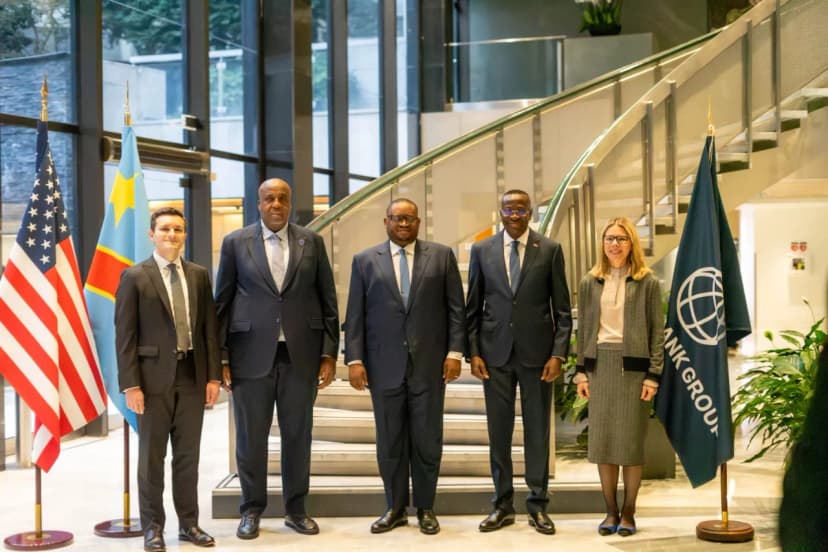
DRC-United States Strategic Partnership Agreement: Inaugural Meeting of the Grand Inga Project Coordination and Governance Committee Held in Paris
Grand Inga: the DRC and the United States take a new step in implementing their strategic partnership. On Monday, 26 October 2026, the Democratic Republic of th…

Grand Inga: From Ambition to Reality
In Paris, the Congolese delegation led by the Deputy Prime Minister and Minister of National Economy, Daniel Mukoko Samba, held several preparatory working sess…