


JOINT STATEMENT ON THE OCCASION OF THE SECOND MEETING OF THE JOINT STEERING COMMITTEE BETWEEN THE UNITED STATES OF AMERICA AND THE DEMOCRATIC REPUBLIC OF THE CONGO
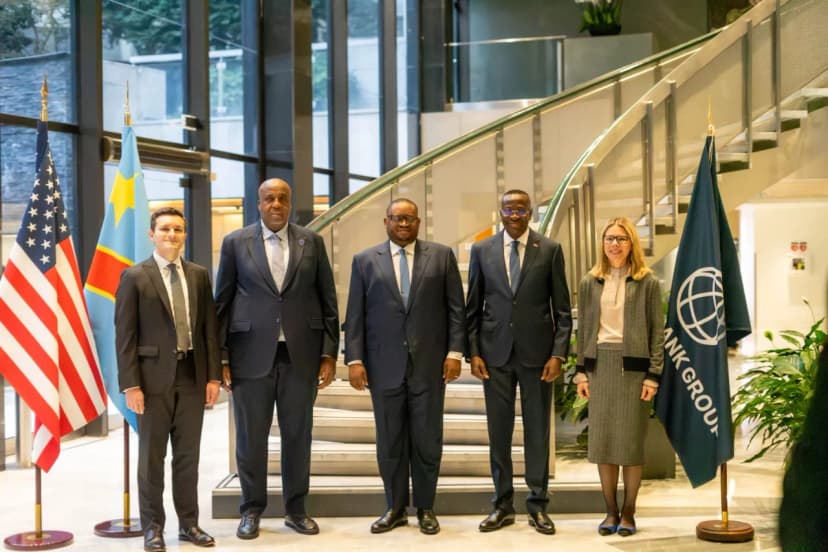
Paris, France, 5 November 2026 – The Governments of the United States of America and the Democratic Republic of the Congo (DRC), hereinafter referred to as “the Parties”, held the second meeting of the United States-DRC Joint Steering Committee (JSC) on 5 November 2026 in Paris, France.
Building on the meeting of 5 February 2026 and the Strategic Partnership Agreement (SPA) signed on 4 December 2025, the Parties reaffirmed their commitment to advancing a pragmatic, results-oriented partnership grounded in peace and security, economic growth, responsible investment, infrastructure development and shared prosperity.
The Parties underscored that the JSC is intended to provide strategic direction to the partnership, strengthen inter-agency coordination, review progress achieved and help translate the commitments of the SPA into concrete initiatives, with clearly defined responsibilities, realistic timelines and measurable results.
1. Accelerating the Implementation of the Strategic Partnership Agreement
The Parties reviewed the progress made since the inaugural meeting of the JSC and discussed the priority actions to be undertaken in order to accelerate the implementation of the SPA.
They stressed the importance of effective coordination among the relevant ministries, administrations, agencies and technical institutions of both Governments, supported by a regular monitoring and evaluation mechanism.
The Parties reviewed the operational framework of the Strategic Asset Reserve (SAR), including the procedures for identifying and designating eligible assets and the arrangements for mobilising qualified American investors, in accordance with the provisions of the SPA and applicable laws and regulations.
They also exchanged views on the portfolio of strategic projects identified by the DRC and on the practical arrangements for their review, prioritisation and implementation.
2. Critical Minerals, Strategic Investment and Industrial Transformation
The Parties reaffirmed their shared interest in developing secure, transparent, resilient and diversified critical mineral supply chains.
They emphasised that the partnership must go beyond the extraction and export of raw materials in order to promote local processing, refining, advanced manufacturing, technology transfer, skills development and the creation of quality jobs in the DRC.
The Parties discussed ways to encourage responsible investment by eligible American companies, financial institutions, development finance institutions and other private sector partners in projects that contribute to value addition and the sustainable transformation of the Congolese economy.
They stressed the importance of high standards of transparency, good governance, environmental protection and social responsibility, as well as genuine opportunities for participation by Congolese businesses and workers.
3. Strategic Infrastructure, Regional Connectivity and Grand Inga
The Parties recognised the essential role of strategic infrastructure and regional connectivity in unlocking the economic potential of the DRC and strengthening trade and investment in the region, notably through the Sakania–Lobito corridor.
They welcomed the holding, on 26 October 2026, of the inaugural meeting of the Grand Inga Project Coordination and Governance Committee and discussed the progress of the project under Article X of the SPA.
The Parties underscored the need to advance the technical, financial, institutional, legal and regulatory work required for project preparation, including the mobilisation of public and private financing and consultation with development finance institutions and multilateral development banks.
They recognised that Grand Inga could serve as a transformative platform for reliable power generation, industrialisation, mineral processing, agro-industry, regional energy integration and, more broadly, economic development.
The Parties also stressed the importance of appropriate environmental and social safeguards, the participation of local communities, skills development and the establishment of centres of excellence to support the project and its long-term benefits.
4. Peace, Security and Implementation of the Washington Peace Accords
The Parties reaffirmed that peace and security in the eastern DRC and throughout the Great Lakes region are essential conditions for sustainable investment, regional integration and the effective implementation of the SPA.
They underscored the importance of the full, verifiable and lasting implementation of the Washington Peace Accords, respect for the sovereignty and territorial integrity of the DRC, the protection of civilian populations and the creation of conditions conducive to the safe and voluntary return of displaced persons.
5. Institutional Coordination and Private Sector Mobilisation
The Parties recognised that the effective implementation of the SPA requires sustained coordination among government institutions as well as active mobilisation of the private sector.
They discussed ways to structure exchanges between eligible American companies and the relevant institutions of the DRC, notably by making available clear information on strategic projects, applicable procedures, investment opportunities and the framework of the Strategic Asset Reserve.
The Parties emphasised that private sector participation should contribute to mutually beneficial outcomes, particularly in terms of investment, local value creation, technology transfer, workforce development and the strengthening of commercial ties between the two countries.
6. Implementation Priorities and Next Steps
In order to maintain the momentum generated by the meeting, the Parties discussed the need to organise follow-up around an operational implementation framework. Priority areas include, in particular:
Further development of the operational framework of the Strategic Asset Reserve, including procedures for asset designation and investor mobilisation;
The establishment of a structured process and timeline for the review and promotion of priority strategic projects;
The continuation of technical and institutional work on Grand Inga, including preparations for updating the feasibility studies and the key milestones of project development;
The identification of priority infrastructure and investment actions related to the Sakania–Lobito corridor;
The designation of institutional focal points and the establishment of a follow-up timeline under the Memorandum of Understanding on Peace and Security;
The organisation of targeted exchanges with American investors, development finance institutions and other relevant private sector partners.
The Parties emphasised that follow-up should, as necessary, specify the responsible institutions, indicative deadlines, expected deliverables and reporting arrangements for each priority area. They recognised the importance of maintaining regular communication within the framework of the JSC and its technical follow-up mechanisms.
7. A New Chapter in United States-DRC Relations
The Parties reaffirmed their determination to advance relations between the United States and the DRC by moving from strategic commitments to concrete implementation and tangible results for the benefit of the people of both countries.
They underscored the complementary nature of peace and security, responsible investment, strategic infrastructure, critical mineral value chains, industrial development and human capital development. They also recalled that the success of the SPA should be measured by its contribution to stability, economic opportunity, sustainable development and shared prosperity.
The Parties expressed their satisfaction with the constructive spirit of the discussions and reaffirmed their commitment to continuing their close cooperation within the framework of the Joint Steering Committee.
Related articles
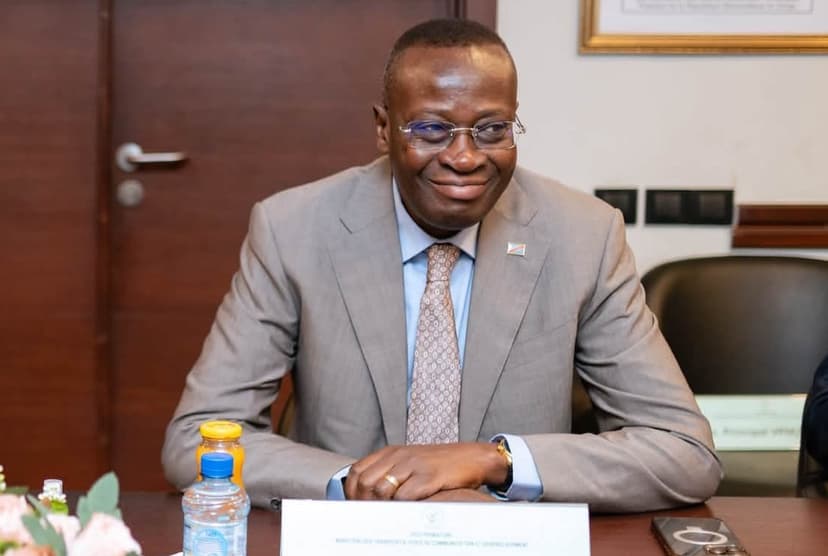
Deputy Prime Minister Daniel Mukoko Samba presents the first semi-annual report on the economy and the territories
The Deputy Prime Minister, Minister of National Economy, Daniel Mukoko Samba, presented his first semi-annual report on the economy and the territories on Frida…
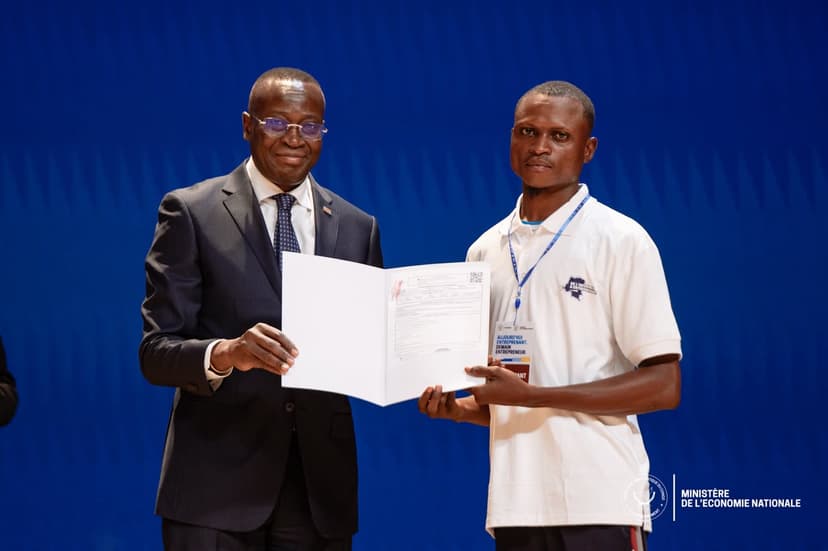
Formalisation of the informal economy: a new milestone reached in the DRC
On Thursday, 12 November 2026, the Ministry of National Economy held, at the Kinshasa Financial Centre and under the High Patronage of Prime Minister Judith Sum…
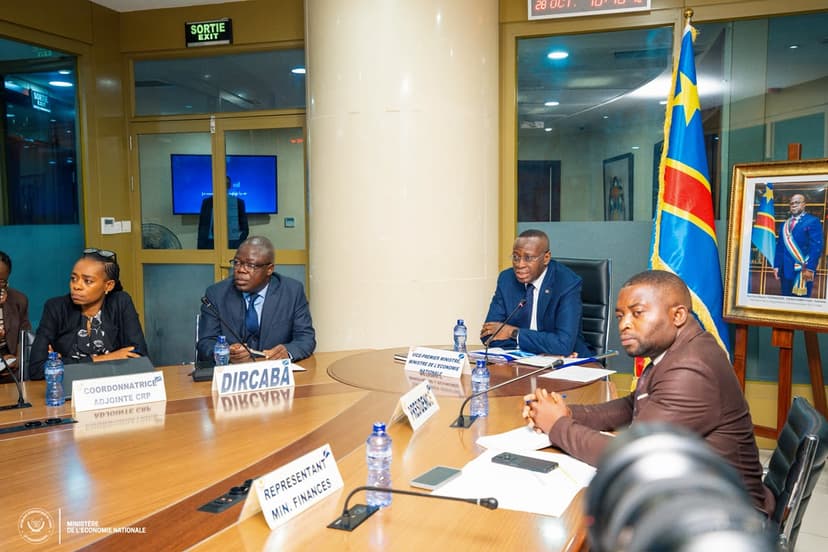
Oil sector reform: the IMF welcomes the progress made by the Congolese Government
As part of the fourth annual review of the DRC’s economic and financial programme, the Deputy Prime Minister, Minister of National Economy, Daniel Mukoko Samba,…

Economic Sector Governance: Daniel Mukoko Samba's Ambitious Reforms Driving the DRC's Economic Catch-Up
For the taxi driver who dreads every rise in fuel prices, the mechanic in Kasa-Vubu who dreams of obtaining a loan to expand his workshop, or the trader who wis…
DRC-United States Strategic Partnership Agreement: Inaugural Meeting of the Grand Inga Project Coordination and Governance Committee Held in Paris
Grand Inga: the DRC and the United States take a new step in implementing their strategic partnership. On Monday, 26 October 2026, the Democratic Republic of th…

Grand Inga: From Ambition to Reality
In Paris, the Congolese delegation led by the Deputy Prime Minister and Minister of National Economy, Daniel Mukoko Samba, held several preparatory working sess…