




Retail activities open to foreign nationals
Digital library
Laws, ordinances, decrees, orders, annual reports, policy notes and studies of the Ministry: find a document by period, type or keyword.
Enter your criteria and start the search: matching documents will be displayed here.
Just published
Click on a document to find it in the search results.
- Monthly bulletin
 TALO Monthly Bulletin, September 2026
- Monthly bulletin
 TALO Monthly Bulletin, August 2026
- Monthly bulletin
 TALO Monthly Bulletin, July 2026
- Monthly bulletin
 TALO Monthly Bulletin, June 2026
- Monthly bulletin
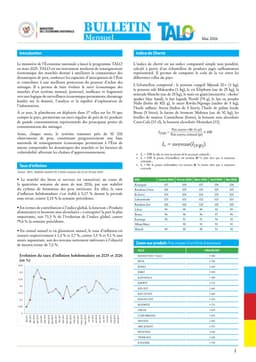 TALO Monthly Bulletin, May 2026
- Monthly bulletin
 TALO Monthly Bulletin on Urban Market Price Monitoring, March 2026
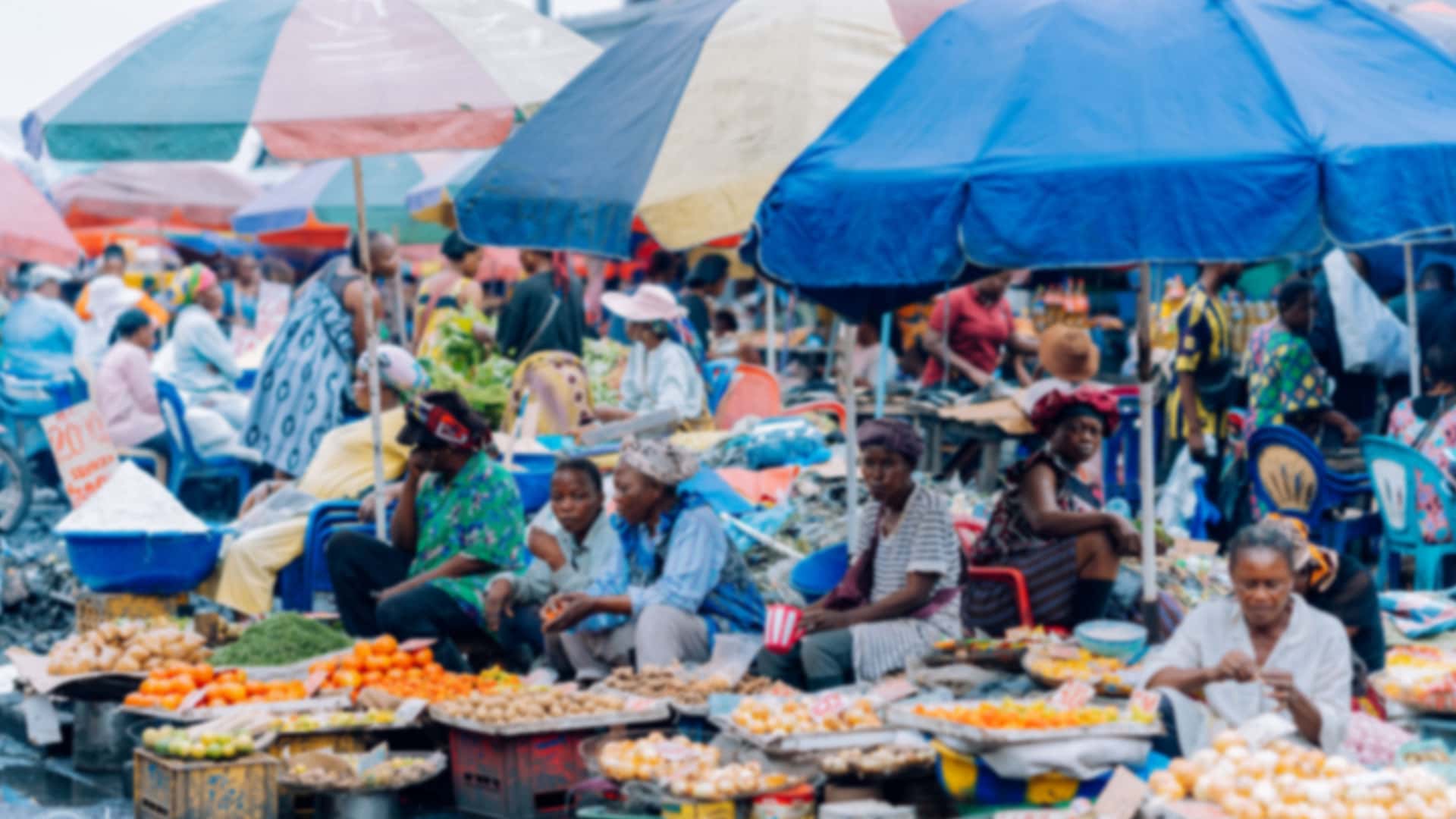
Three strategic pillars transforming the daily lives of the Congolese people
Since taking office as head of the Ministry of National Economy in June 2024, Deputy Prime Minister Daniel Mukoko Samba has placed the three strategic pillars entrusted to the Ministry at the heart of his work: tackling the high cost of living, formalising the informal economy and driving productive recovery. One clear ambition: to transform the Congolese economy by focusing on the sectors that directly affect people’s daily lives. Underpinned by the Government Action Programme 2024-2028, these three strategic pillars are already delivering tangible results on the ground.
01.
Tackling the high cost of living
In the face of soaring global oil prices, the Ministry has strengthened the resilience of the petroleum sector to prevent rising fuel prices from hitting transport and essential goods, without putting pressure on the Public Treasury.
02.
Formalising the informal economy
“Mibimisa po Osungama”: more to gain by making yourself known. Reaching artisans and traders where they work, formalisation opens up access to health coverage, training and financing.
03.
Productive recovery
Through CEREP and FOREC, the Government is reviving agricultural and industrial production, reducing dependence on imports and regulating markets to preserve household purchasing power.
The steps to formalisation

Determine the nature of the economic activity carried out and the related legal obligations.
Learn more
Submit the application and register the business with the one-stop shop for business creation.
Learn more
Receive the trade register entry, the national identification number and other official documents.
Learn more
Ensure ongoing compliance with tax, social security and regulatory obligations after formalisation.
Learn moreKey indicators of the Congolese economy
- 6.50%PIB réelDetails
Taux de croissance du PIB
Outdated data - Hebdomadaire0.13Glissement annuel7.20Cumul annuel7.70In %Variation hebdomadaireDetails
Inflation
Outdated data - −2.00% du PIB% du PIBDetails
Solde budgétaire
Outdated data - Officiel2,264.00Parallèle acheteur2,216.66Parallèle vendeur2,318.95In CDF pour 1 USDOfficiel et parallèleDetails
Taux de change USD/CDF
Outdated data
Price trends
- Change over the week Average week-on-week change in the prices of the same items at the same points of sale. Extreme changes are excluded. This is not the official inflation rate: each product carries equal weight.
- +0.1% stable
- Increases, stable prices and decreases Among items observed in both weeks, the share whose price rose, remained unchanged or fell. A rise shared by many products does not call for the same response as a shock affecting only a few.
- 8% up
- 86% stable
- 6% down
- Most expensive city The index compares a city's prices with national prices, product by product: 100 is the national level; 117 means 17% more expensive. Only cities where at least 40 products are compared are ranked.
- Kabinda · index 127.05
- Least expensive city The index compares a city's prices with national prices, product by product: 100 is the national level; 117 means 17% more expensive. Only cities where at least 40 products are compared are ranked.
- Boma · index 77.53
Week from 16 to 22 November 2026
Hover over a city or browse the cities using the keyboard to read its price; select a city to see all its prices.
Deviation from the national average
- more than 15% below
- 5 to 15% below
- 2 to 5% below
- within 2%
- 2 to 5% above
- 5 to 15% above
- more than 15% above
- not surveyed
Headlines
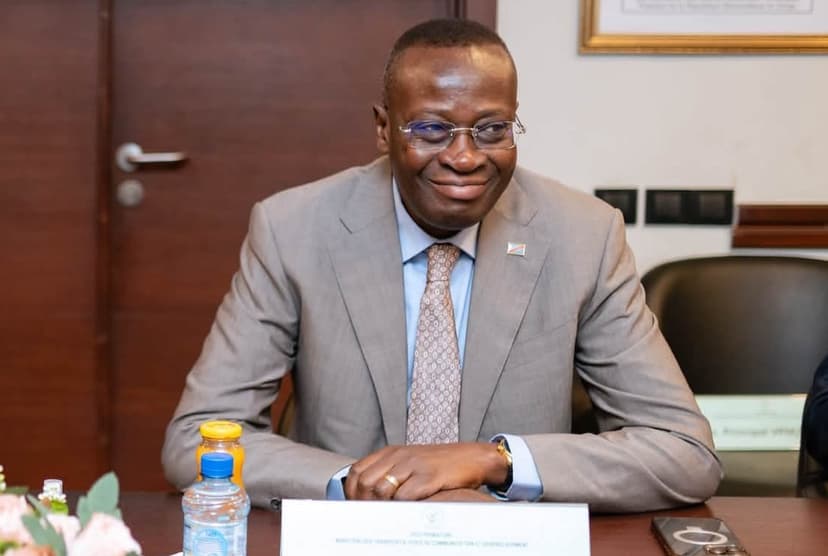

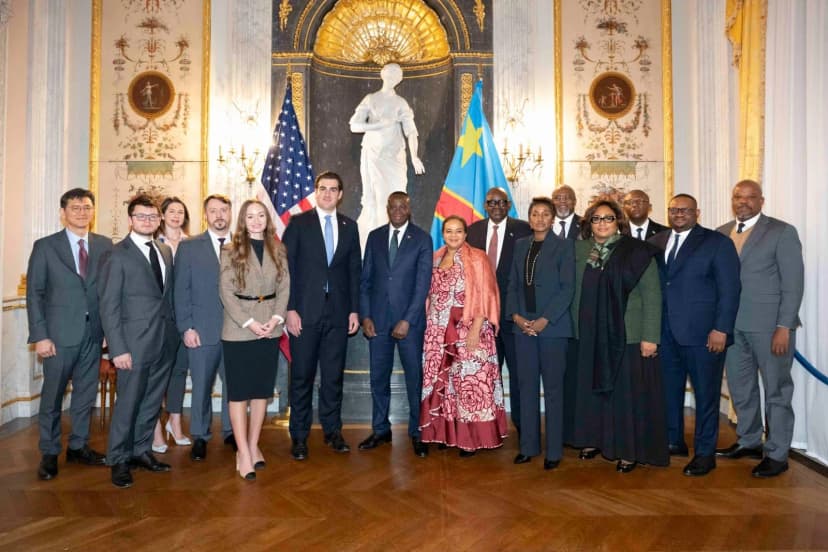

“Talo”: the price, in Lingala.
/ Ministry of National Economy
Download TALO
TALO is the Ministry of National Economy’s application for recording market prices. Launched on 14 January 2025 in Kinshasa and developed by young Congolese, it enables agents to collect the prices of everyday consumer goods every week and allows economic operators to declare their stocks, prices and price structures. Available on Android and iOS.
 App Store: coming soon
 Google Play: coming soon
Our institutional partners