

3rd EDITION OF THE D.R. CONGO – ANGOLA ECONOMIC FORUM
“Sub-regional integration and development of cross-border trade” Venue: Golden Tulip Hotel, Kinshasa
FINAL COMMUNIQUÉ
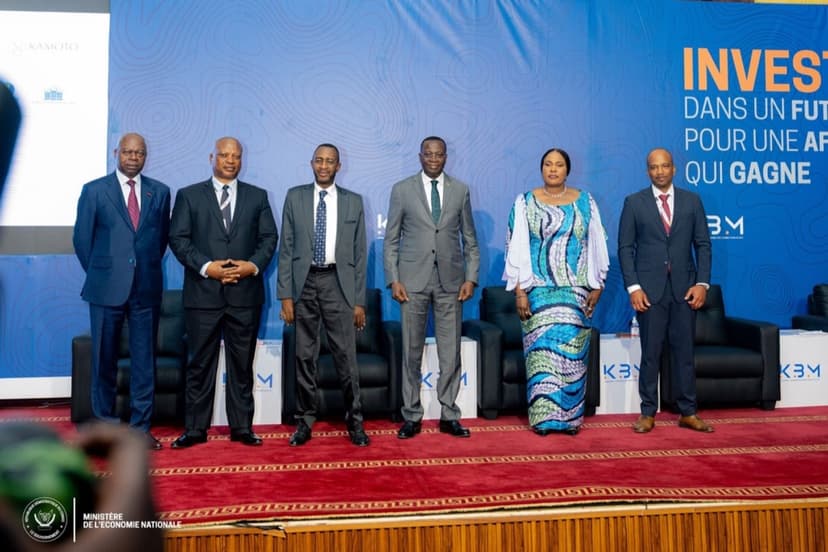
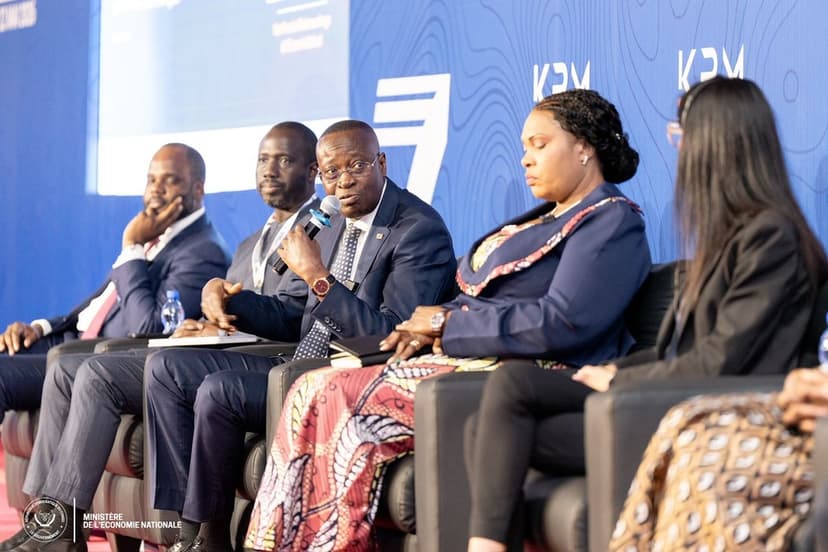
Under the High Patronage of Their Excellencies Mr Félix Antoine TSHISEKEDI TSHILOMBO, President of the Democratic Republic of the Congo, and Mr João Manuel Gonçalves LOURENÇO, President of the Republic of Angola, the third edition of the Republic of Angola – Democratic Republic of the Congo Economic Forum was held in Kinshasa from 1 to 2 April 2026, under the theme: “Sub-regional integration and development of cross-border trade”.
The Forum brought together members of the Governments, heads of public administrations, financial institutions, economic operators and experts from both countries. The proceedings were marked by a spirit of fraternity and cooperation and by a shared determination to strengthen bilateral economic relations, in the mutual interest of the two peoples.
I. Objectives of the Forum
The main objectives of the Forum were to: 1. promote the development of formal cross-border trade; 2. strengthen economic and financial integration between the two countries; 3. identify structural obstacles to trade; 4. propose concrete measures to stimulate investment and
economic partnerships.
II. Findings
The participants noted that, despite the considerable potential for trade between the two countries, several constraints continue to hinder its development, in particular:
1. the predominance of informal trade; 2. difficulties related to formal payment systems; 3. the multiplicity of taxes and administrative barriers; 4. harassment at the borders; 5. inadequate logistics and border infrastructure; 6. the lack of harmonisation of regulatory and tax frameworks; 7. the low level of digitalisation of procedures.
III. Recommendations At the close of the proceedings, the participants made the following recommendations: 1. Trade facilitation and customs modernisation
Accelerate the digitalisation and interconnection of customs systems; Establish one-stop border posts; Simplify and harmonise customs and tax procedures.
2. Formalisation of cross-border trade
Introduce a simplified trade regime for small-scale border trade; Strengthen mechanisms to combat fraud and smuggling.
3. Infrastructure development
Modernise border and logistics infrastructure; Improve transport corridors and transit facilities. Make the Lobito corridor a backbone of regional integration, through the coordinated modernisation of railway and road infrastructure, the creation of mining, industrial and agro-industrial activities, and the inclusion of local communities along the corridor. Invest in electricity generation to meet growing demand. Develop multimodal logistics platforms (rail–road–port) in order to optimise transport costs and lead times.
4. Financial integration
Harmonise foreign exchange regulations;
Promote the use of regional and pan-African payment systems (SADC-RTGS, PAPSS); Facilitate transactions in national currencies.
5. Financial inclusion
Improve people’s access to financial services; Promote financial education and digital solutions.
6. Institutional cooperation
Establish permanent consultation mechanisms; Strengthen cooperation between customs, tax and financial administrations.
7. Public-private partnership
Encourage joint investments and joint ventures; Involve the private sector more closely in the implementation of reforms.
8. Fisheries and blue economy
develop cold storage and refrigerated transport infrastructure; improve the logistics chain in order to reduce post-harvest losses; effectively implement bilateral fisheries agreements; jointly manage maritime areas and prevent fishing-related incidents; strengthen maritime surveillance mechanisms and the fight against illegal fishing.
9. Hydrocarbons
establish a bilateral framework for secure and transparent trade; structure a regional petroleum value chain; develop integrated cross-border logistics platforms; establish a joint financing mechanism.
IV. Commitments The parties agreed to:
1. draw up a joint roadmap, with performance indicators; 2. ensure regular monitoring of the implementation of the recommendations; 3. strengthen coordination between the competent institutions of the two countries; 4. work towards the gradual establishment of an integrated economic area;
5. have the two central bank governors, who held a meeting, sign a memorandum of understanding on a date to be agreed in July 2026;
V. Conclusion
At the close of the proceedings, the participants expressed their satisfaction with the quality of the discussions and the results achieved. They welcomed the commitment of the highest authorities of the two countries to strengthening bilateral economic cooperation and promoting effective and sustainable integration. The participants reaffirmed their commitment to translating the recommendations of the Forum into concrete actions for the benefit of the people of both countries. The next forum will be held in Angola on a date to be agreed between the two governments.
This final declaration is drawn up in French and Portuguese.
Done at Kinshasa, on 2 April 2026
For the Government of the Democratic Republic of the Congo
Daniel MUKOKO SAMBA Deputy Prime Minister, Minister of National Economy
For the Government of the Republic of Angola
José de Lima MASSANO
Minister of State, Minister for Economic Coordination
Related articles

CLARIFICATION FROM THE MINISTRY OF NATIONAL ECONOMY Regarding the article entitled: “Combining wholesale and retail trade: what the Ministry of Economy prohibits, what the 1973 law permits”
CLARIFICATION FROM THE MINISTRY OF NATIONAL ECONOMY The Ministry of National Economy welcomes and thanks the press and all those who have shown interest in the …

PRESS RELEASE No. 158/2026 - Q2 2026: CSPPP certifies USD 146 million in PMAG for all supply zones
PRESS RELEASE No. 158/2026 Q2 2026: CSPPP certifies USD 146 million in PMAG for all supply zones On Thursday 13 and Friday 14 August 2026, the Petroleum Product…

PRESS RELEASE No. 159/2026 - Lusambo: Economic operators receive their formalisation documents
PRESS RELEASE No. 159/2026 Lusambo: Economic operators receive their formalisation documents Following the visit of the Deputy Prime Minister, Minister of Natio…

PRESS RELEASE No. 154/2026 - The Deputy Prime Minister, Minister of National Economy, receives a delegation from the Scientific Elite Corps of UDPS/Tshisekedi
PRESS RELEASE No. 154/2026 The Deputy Prime Minister, Minister of National Economy, receives a delegation from the Scientific Elite Corps of UDPS/Tshisekedi The…

PRESS RELEASE No. 152/2026 - DPM Daniel Mukoko Samba calls for increased investment in health at the opening of the 2nd edition of the Hospital Fair
PRESS RELEASE No. 152/2026 DPM Daniel Mukoko Samba calls for increased investment in health at the opening of the 2nd edition of the Hospital Fair On Thursday, …

PRESS RELEASE No. 151/2026 - Accelerating access to safe drinking water and electricity: Deputy Prime Minister Daniel Mukoko Samba held an introductory meeting with stakeholders
PRESS RELEASE No. 151/2026 Accelerating access to safe drinking water and electricity: Deputy Prime Minister Daniel Mukoko Samba held an introductory meeting wi…